


People now find businesses in two ways: through search results and through AI tools like ChatGPT, Perplexity and Google’s AI results. The good news is that both reward the same things: a clear, well-organized website that genuinely answers people’s questions. Here are the foundations I focus on, and the ones you can start on today.
Start with how your customers search
Good SEO starts with knowing what your customers search for. Think about the words they use (which aren’t always the words you use), the questions they ask and the places they live or work.
A real estate agent might think in terms of listings, while buyers search for homes for sale in White Rock. Writing for the way people actually search makes it much easier for them to find you.
Give every page one clear job
Each important service or topic deserves its own page, with one clear heading that says exactly what it is. A single page trying to cover everything is harder for visitors and search engines to understand.
Organize your menu around what people look for, too. On Hamish Ross Real Estate, the market report and journal sit in the main menu alongside listings, buying and selling.
Write titles and descriptions that say what’s there
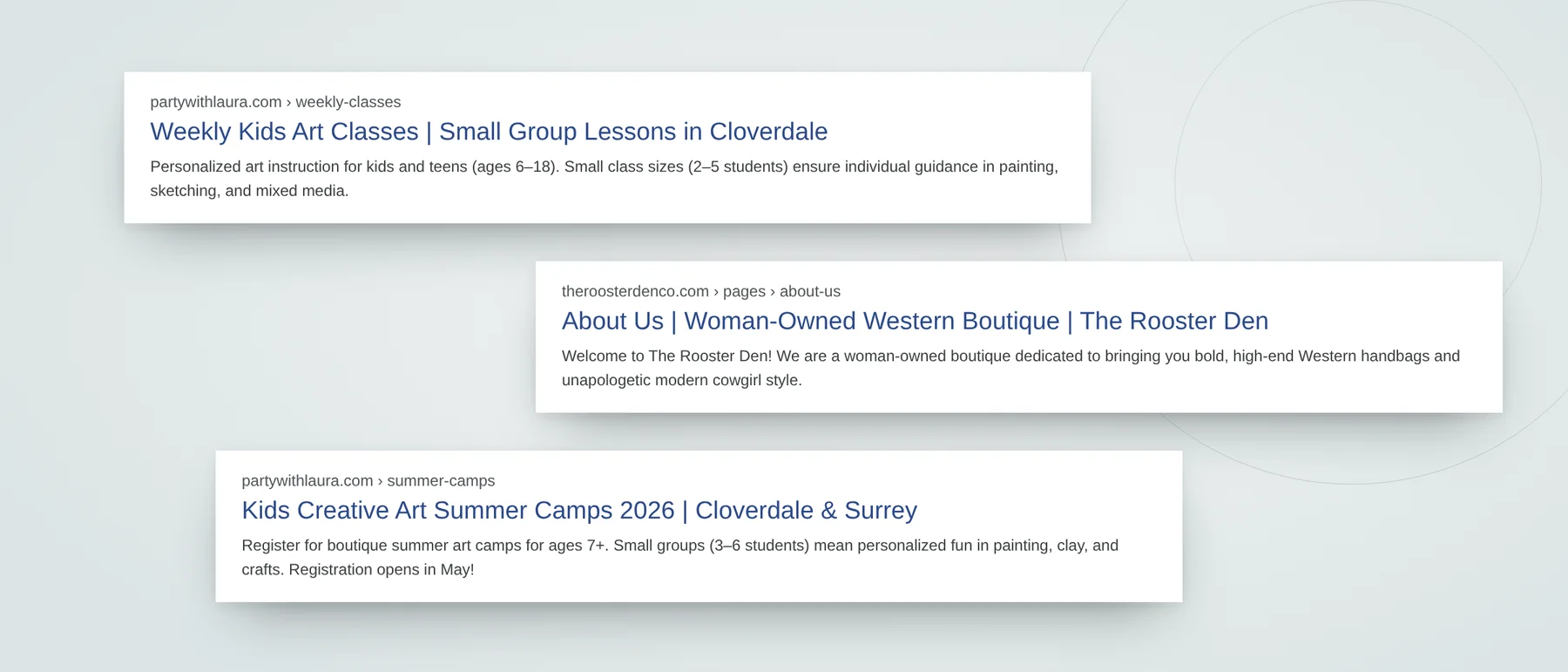
Every page has a title and a short description that can appear in search results. They’re often the first thing someone reads about your business, so make them specific: what the page offers, and where, if that matters.
Vague titles like Services or Home waste that space. A title like Weekly Kids Art Classes in Cloverdale tells people, and search engines, exactly what they’ll find.
Clear, well-organized and genuinely useful content helps you in search results and in AI answers.
Answer questions in plain language
AI tools in particular look for clear, direct answers. Pages that plainly explain what you offer, who it’s for, where you work and what happens next are easier for them to understand and mention.
FAQs, service pages that explain the details and guides like this one all help. So does structured information behind the scenes (often called schema), which labels things like your business name, location and services so they can be read reliably.
Show where you are
If you serve a particular area, say so clearly in your page titles, headings and copy. Name the neighbourhoods and cities you serve, the way Hamish Ross Real Estate names White Rock, South Surrey and Ocean Park.
Set up a Google Business Profile with accurate details, photos and hours, and keep your business name, address and phone number the same everywhere they appear online. I set one up for The Rooster Den Co as part of the store’s redesign.
Make your site easy to use
Search engines pay attention to the experience a site offers. Pages should load quickly, work well on phones and be easy to navigate. Descriptive image file names and alt text help too, for search and for people using screen readers.
Connect the right tools
Google Search Console shows which searches bring people to your site and flags problems Google finds. Google Analytics shows what visitors do once they arrive. Both are free, and setting them up at launch means you have useful information from day one.
Build steadily, without shortcuts
SEO builds over time. Some improvements can show up fairly quickly, while broader progress usually takes months of steady work. Be wary of anyone who promises fast rankings or a guaranteed spot.
Avoid tricks like stuffing keywords into every sentence, creating near-identical pages for every town or buying links. They can do more harm than good. Useful content and a well-organized website are what last.
The bottom line
You don’t need to master every detail of SEO to make progress. Start with clear pages, specific titles, plain-language answers and an accurate Google Business Profile, then keep improving over time. If you’d like help, I can look at where your website is now and make each page clearer, whether I built it or not.
Enquire About Your Project